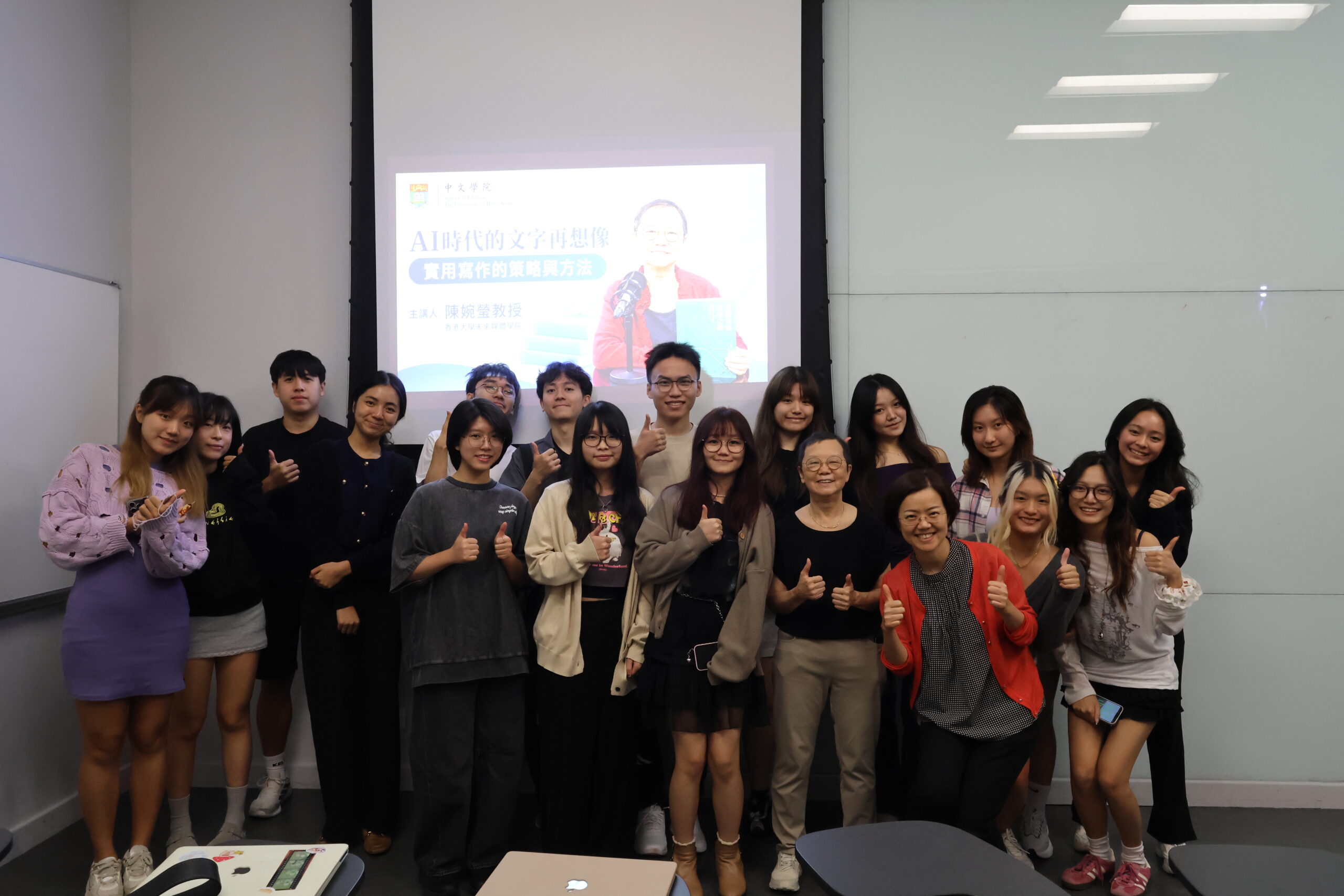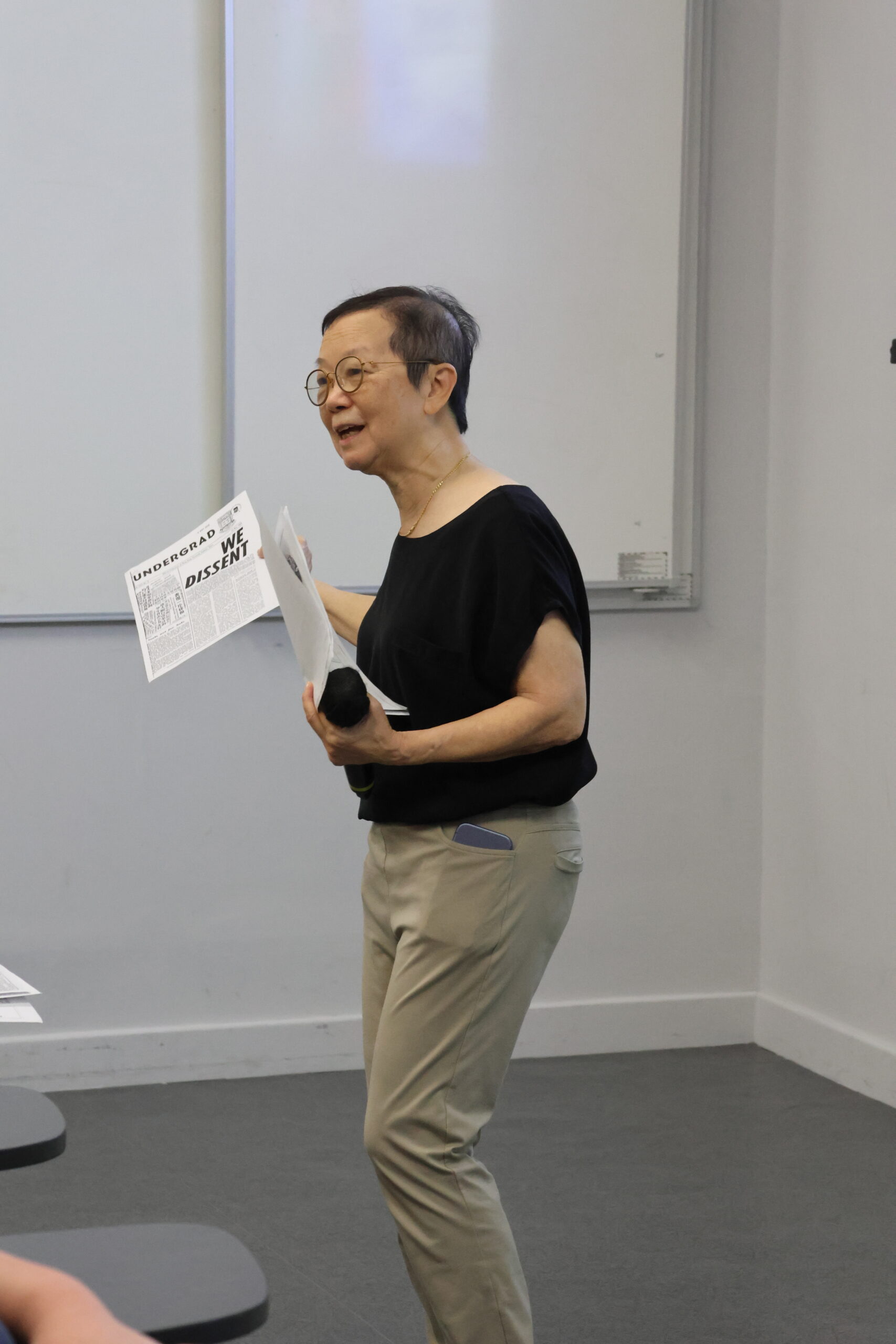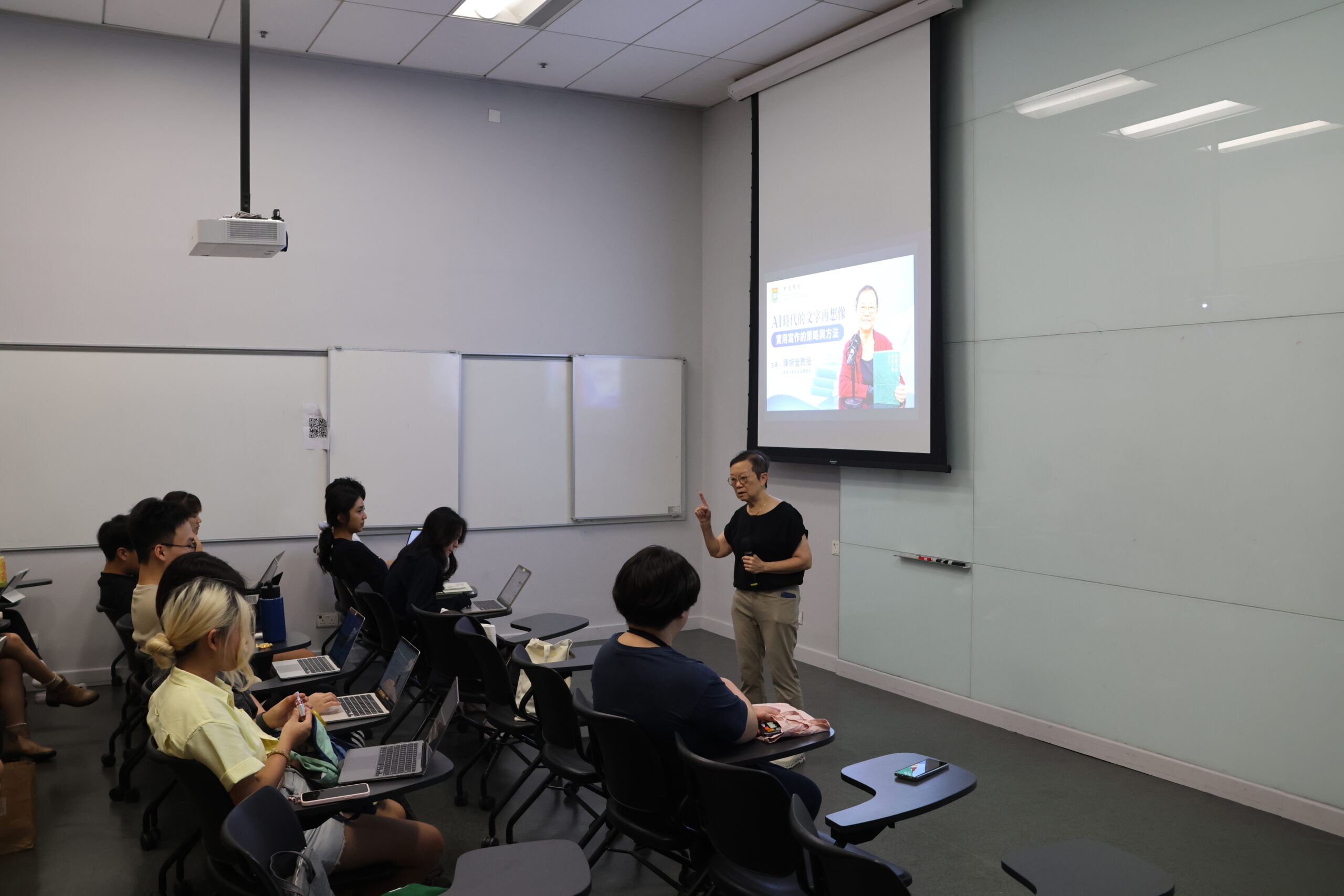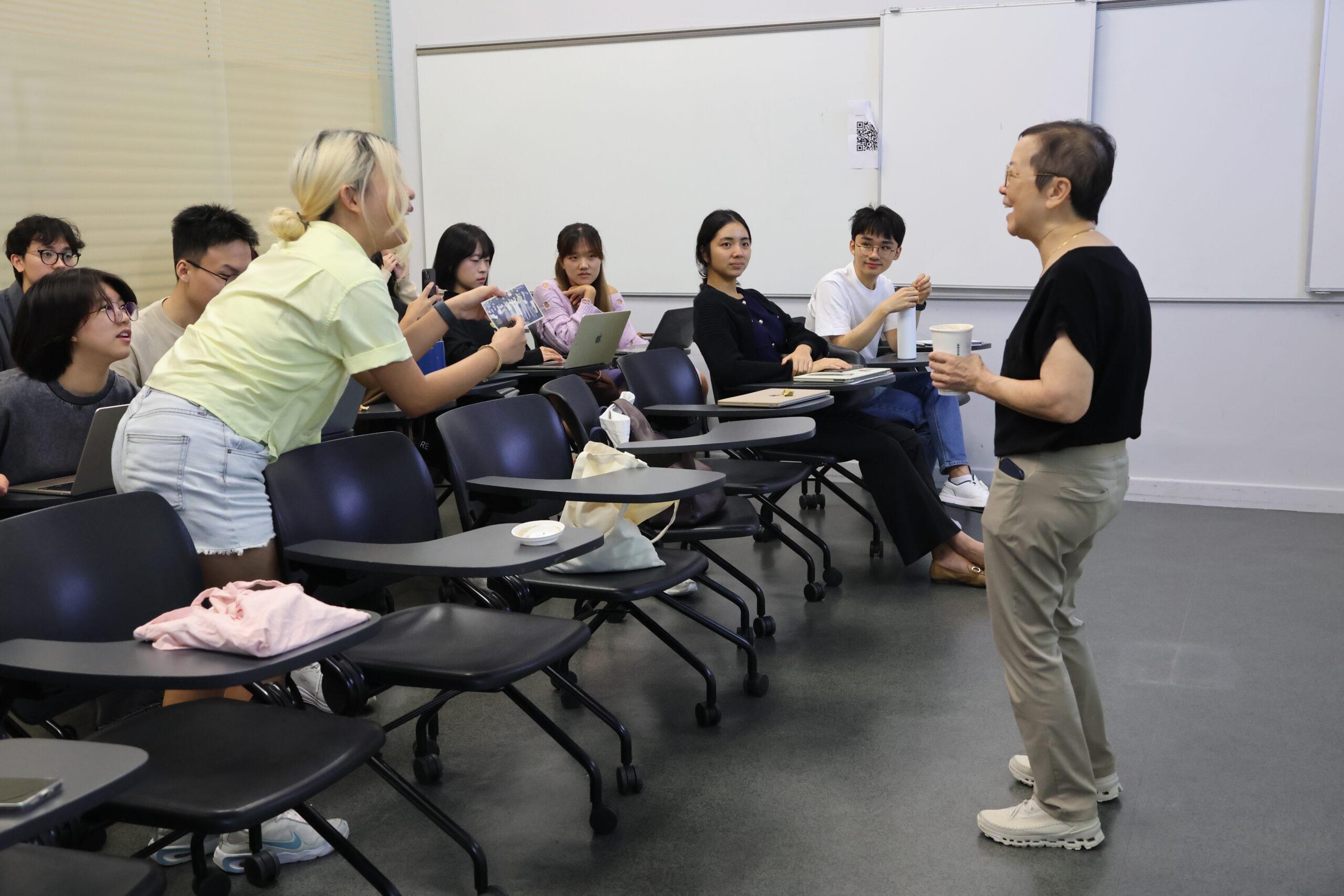
CLASSROOM SHARING / 2026.10.30
As AI generates more words, clear thinking, good questions and thoughtful expression matter all the more.

01 / RECAP
Classroom sharing recap
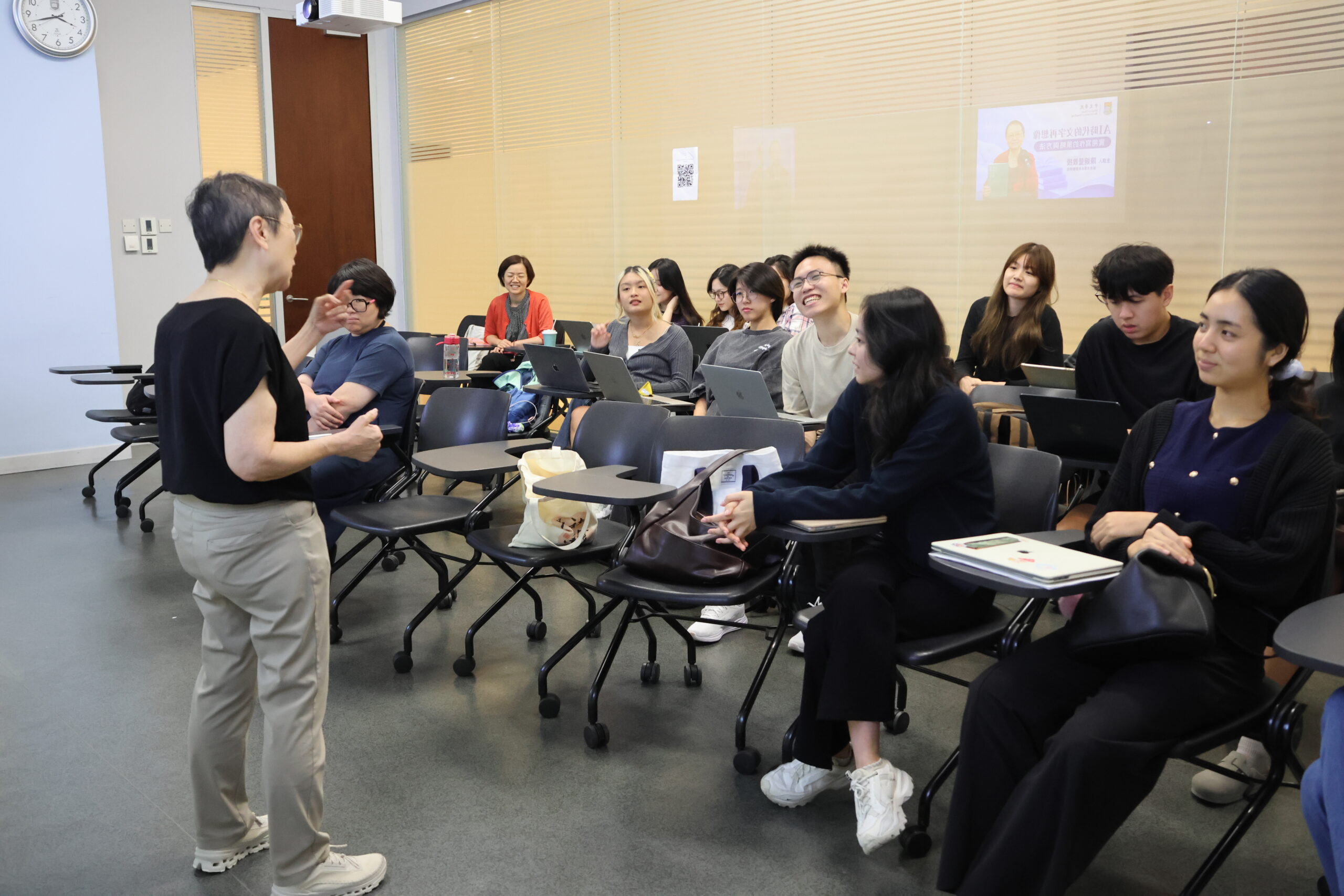
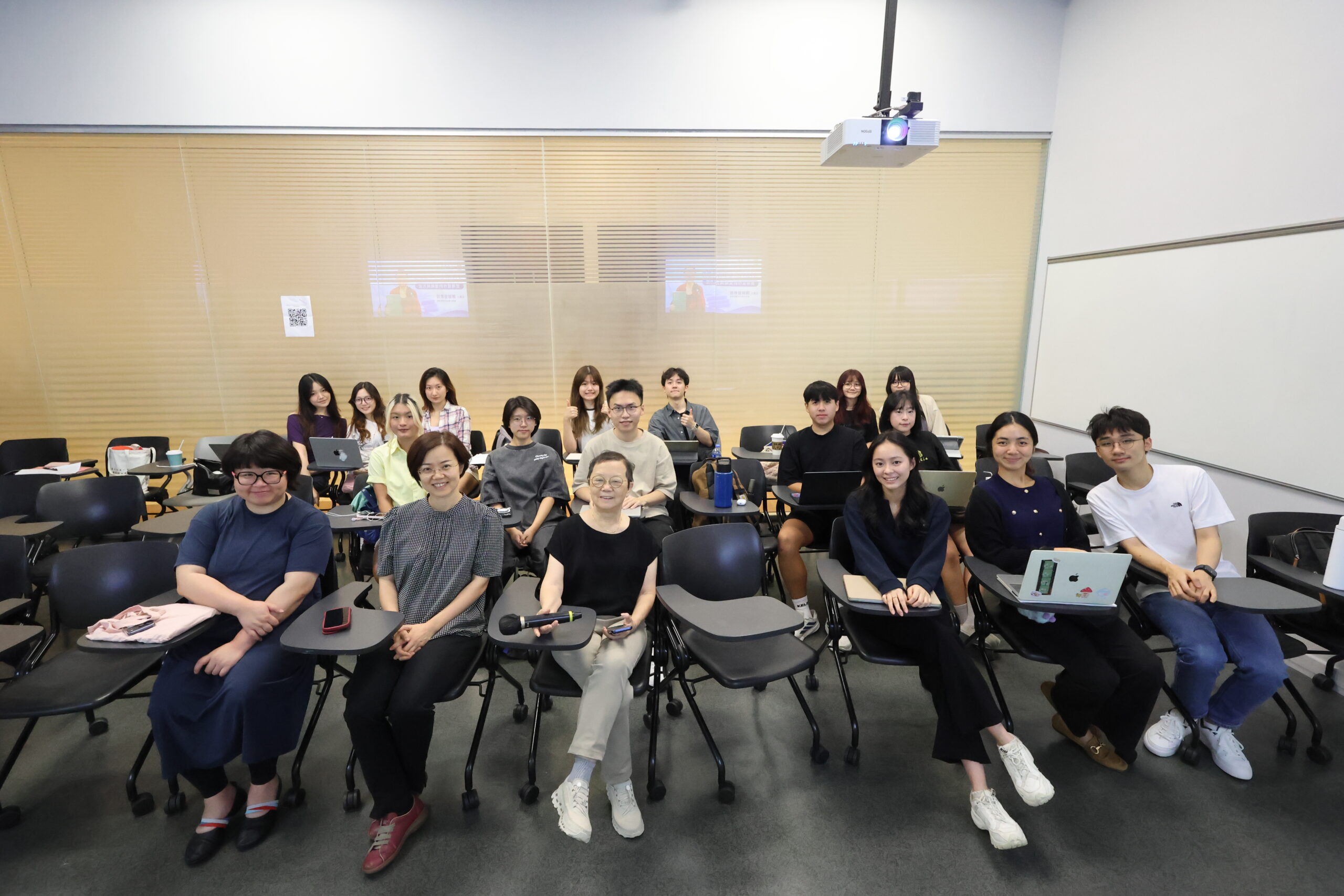
On 30 October 2026, the School of Chinese at The University of Hong Kong hosted Professor Ying Chan for “Reimagining Writing in the AI Era: Practical Strategies and Methods”.
Drawing on her experiences as a student, reader and journalist, Professor Chan explored writing as a way to record life, understand society and communicate. She then turned to a question for the AI era: when information is readily available, how can we ask clear questions, assess answers and organise our own ideas? The session concluded with practical lessons from news writing.
Make reading and writing a habit
Stories and suspense can sustain an interest in reading, while short daily writing builds fluency over time. Professor Chan used the example of writing 300 Chinese characters a day to illustrate the value of regular practice, alongside reading and listening.
Find stories through experience
From student publications to reporting, writing grows through observation, questions and action. When approaching an unfamiliar topic, learn, prepare and find a way in. Turning complex information into something readers can understand is a valuable communication skill.
Bring language and knowledge to AI
Clear language helps us give effective instructions; knowledge of a subject helps us question, refine and assess the response. Professor Chan encouraged learning to use AI while retaining independent understanding and judgment.
Use writing to organise thought
Words carry ideas and help give them structure. Reading, understanding language and building knowledge give substance to expression. For future teachers, helping students develop an interest in words is equally important.
Write directly, with strong verbs
Practical writing can begin with plain language, short sentences and the active voice: make clear who does what. Choose precise, strong verbs, remove unnecessary adjectives and adverbs, and vary sentence length to create rhythm.
Show through detail, then revise
Rather than simply describing a person or place in general terms, use concrete details to bring readers into the scene. Revise your own work and remain open to editing by others, making the writing clearer and more engaging.
02 / GALLERY
Scenes from the classroom
Six photographs of the talk, discussions and group moments. Select a photo to view it at full size.